

Choosing the right bathroom vanity really comes down to three things: your space, your storage needs and the style you’re drawn to. It’s also one of the few pieces in a home that has to work equally hard as furniture and as function, which is why it’s worth exploring more than just what’s trending on a mood board. Here’s a look at the most popular vanity styles right now, along with a handful of ideas that don’t come up nearly as often as they should.
Key Takeaways
- Built-in vanities remain the most common choice, making up roughly 58% of upgraded vanity installations, followed by freestanding at 30% and floating vanities at 11%, according to Houzz’s most recent Bathroom Trends Study.
- Nearly half (47%) of upgraded vanities measure 48 inches or less, reflecting how many renovations are happening in smaller or secondary bathrooms rather than primary suites.
- White oak accounts for roughly 23% of solid-wood vanity choices, making it one of the most popular wood tones for cabinetry right now.
- A floating vanity’s open base can be fitted with integrated LED lighting to create a soft glow effect, a detail that’s become a quiet signature of high-end bathroom design.
- Repurposing an antique dresser or console table into a vanity is a growing trend for homeowners who want a one-of-a-kind piece rather than a manufactured cabinet.
Popular Bathroom Vanity Styles
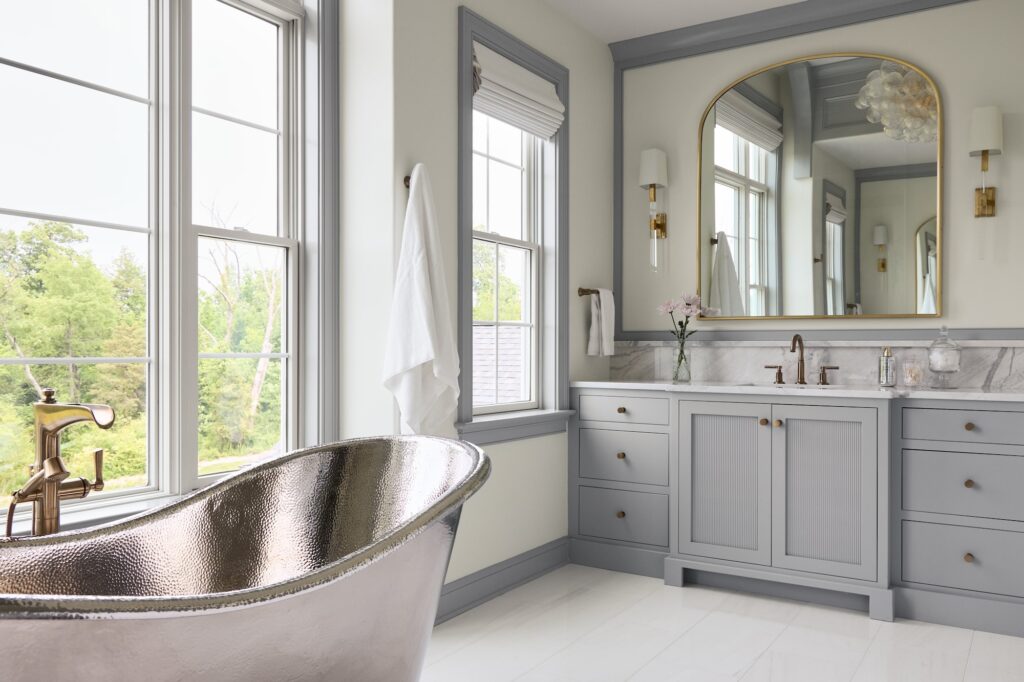
A few vanity styles consistently come up as favorites, each solving a slightly different design or storage need.
Floating, wall-mounted vanities. By mounting to the wall rather than resting on the floor, a floating vanity makes a bathroom feel larger and lighter, since the floor stays visible underneath. It’s an especially strong choice for smaller bathrooms, and it offers an added practical benefit: the height can be customized, which makes it a genuinely accessible option for aging-in-place design.
Furniture-style freestanding vanities. These vanities are designed to look less like a built-in fixture and more like a standalone piece of furniture, often with visible legs, a more detailed profile and a warmer, collected feel. They remain the second most common vanity style chosen in renovations, offering a nice middle ground between the built-in vanity’s storage capacity and the floating vanity’s lighter visual footprint.
Double vanities with clear separation. For shared primary bathrooms, a double vanity with a visual divider, whether that’s a tower of drawers between the two sinks or simply enough spacing to feel distinct, gives each person their own dedicated space rather than one long shared counter.
Full built-in vanities. Still the most common style overall, a built-in vanity offers the most storage capacity per square foot, running from countertop to floor with no wasted space underneath. It remains the practical default for many households, particularly in smaller secondary bathrooms where storage matters more than an open, airy look.
Materials Worth Considering
Material choice affects both the look and the long-term durability of a vanity, and it’s worth weighing a few options before settling on one.
Solid wood brings warmth and natural variation to a vanity, and lighter tones like white oak have become especially popular for their ability to feel both contemporary and warm at once. Solid wood does require more attentive care around moisture than some alternatives, so proper sealing and finish matter here.
Quartz countertops paired with a vanity base are a popular choice for their durability and low maintenance, particularly in a busy household bathroom. If you’re weighing quartz against other countertop materials, it’s worth reading through the full pros and cons of quartz before deciding, since the same considerations that apply in a kitchen often carry over to a bathroom vanity.
Painted MDF or engineered wood offers a smooth, consistent finish at a more accessible price point and it’s a practical choice for vanities that will see heavy daily use, since it resists the natural expansion and contraction solid wood can experience in a humid bathroom environment.
Bathroom Vanity Ideas You Might Not Have Considered
Beyond the popular styles, a few ideas don’t come up in every conversation about vanities but consistently make a real difference in how the space looks and functions.
Integrated lighting beneath a floating vanity. Rather than relying solely on overhead or mirror lighting, a soft LED strip tucked beneath a floating vanity creates a subtle glow that highlights the open space below and adds a genuinely high-end, architectural touch after dark.
A repurposed antique piece. Converting an old dresser, console table or sideboard into a vanity with a cut-out sink and waterproofed finish gives a bathroom a completely unique piece that a manufactured cabinet simply can’t replicate. It’s a growing trend among homeowners who want their vanity to feel more like a furniture find than a fixture.
A hidden laundry hamper drawer. Building a pull-out hamper directly into the vanity base keeps dirty laundry out of sight without needing a separate hamper taking up floor space, a small addition that makes a noticeable difference in daily tidiness.
A fluted or reeded front. Vertical grooved detailing on cabinet doors and drawer fronts adds texture and a sense of craftsmanship without introducing additional color or pattern, a detail that’s shown up increasingly in higher-end vanity design as an alternative to flat, minimalist fronts.
A vanity tower for vertical storage. Rather than expanding a vanity’s width to add storage, a narrow, floor-to-ceiling tower positioned beside or between sinks adds significant storage capacity without eating into counter space, particularly useful in double-vanity layouts.
An integrated charging drawer. Building an outlet directly into a vanity drawer keeps hair tools, electric toothbrushes and phone chargers powered and hidden, rather than cluttering the counter with visible cords.
Choosing Based on Your Space and Household

The right vanity ultimately depends on how your household actually uses the bathroom. A busy family bathroom generally benefits from more built-in storage and durable materials that hold up to daily wear, while a primary suite has more room to prioritize style, whether that’s a furniture-style freestanding piece or a floating vanity with integrated lighting. A smaller guest bath or powder room is often where a floating vanity makes the most visual impact, since the space-saving benefit matters most where square footage is tightest.
Cabinet quality matters just as much as style here too, since a beautifully designed vanity with poor construction won’t hold up the way it should. It’s worth understanding how cabinet upgrades affect a home’s overall value before deciding how much to invest in this particular space, especially if resale is part of your long-term thinking.
If you’d like to see these styles and materials in person, exploring our cabinet lines is a great starting point, and our design center is where you can actually test finishes, hardware and layouts before committing to a final vanity design.
FAQ
What’s the most popular bathroom vanity style right now?
Built-in vanities remain the most common, accounting for roughly 58% of upgraded installations, followed by freestanding furniture-style vanities at 30% and floating, wall-mounted vanities at 11%.
Are floating vanities a good choice for small bathrooms?
Yes. Floating vanities keep the floor visible underneath the cabinet, which makes a small bathroom feel more open and spacious, and they offer flexible mounting height for accessibility.
What’s a good vanity idea for extra storage without added width?
A narrow, floor-to-ceiling vanity tower positioned beside or between sinks adds significant vertical storage without taking up additional counter or floor space.
Can I turn an old dresser into a bathroom vanity?
Yes, and it’s a growing trend for homeowners who want a unique, one-of-a-kind piece. It requires a cut-out for the sink and a properly sealed, waterproofed finish to hold up in a bathroom environment.
What material is most popular for bathroom vanities right now?
White oak is one of the most popular solid wood choices, accounting for roughly 23% of solid-wood vanity selections, prized for its warm tone and contemporary feel.